

FT Global Affairs and Business Council - London Edition

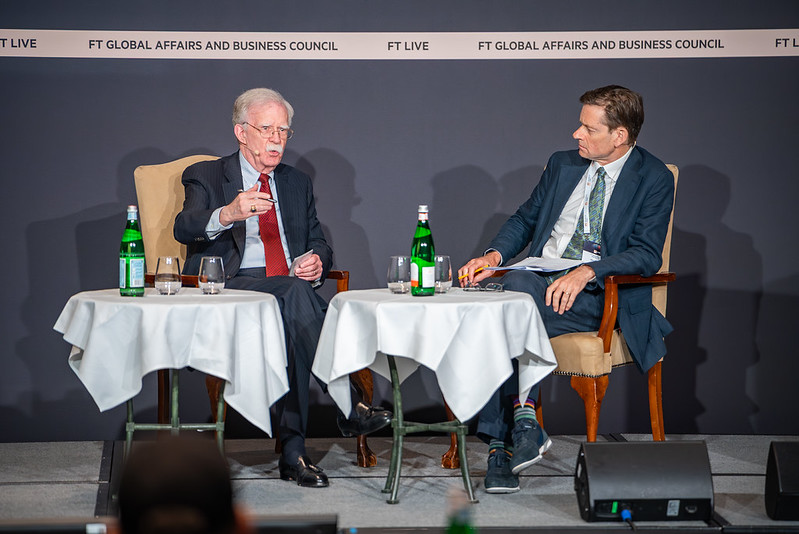
Businesses around the world are operating in an increasingly uncertain economic and geopolitical environment. The Financial Times has created the FT Global Affairs and Business Council, a series of invitation-only meetings offering the insight and analysis decision-makers need in uncertain times.
This half-day conference, followed by a private dinner, will examine how leaders are managing disruption, from a new era of transatlantic relations to the remapping of global commerce. How might conflict in the Middle East continue to destabilise the world economy? How can Europe take greater responsibility for its own security and competitiveness? Where are the emerging risks and opportunities for growth?
A Note from the FT's Foreign Editor
Even by his disruptive standards, Donald Trump’s administration has had an extraordinary impact on the world in 2026. His dramatic intervention in Venezuela in January when US forces seized its president Nicolas Maduro and took him to New York to stand trial, was merely the prelude to the far more consequential and risky decision to join forces with Israel and attack Iran. The war has destabilised the global economy in developed and emerging markets. The spike in the oil price has upended business leaders’ expectations for 2026, against the backdrop of an increase in inflation around the world and amid expectations of a more hawkish stance on interest rates. All the while Trump’s preference for unpredictability has not just shaken the post-1989 world order to its core but fuelled anticipation of more shocks to come later this year.
For business leaders adapting to these geopolitical shifts is now the number one priority. China seems to be the clear winner of all this disruption. A second “China Shock” is underway as it busily floods the world’s markets with its high-end manufacturing. But how closely should companies and governments cooperate with Beijing? How can companies engage with the US and Asia as trade routes - and particularly now in the Gulf - are redrawn? Will supply chains need to be rerouted as a new era of US protectionism changes business models for exporters? Europe is under acute pressure from its old ally and hegemon, America, to take more responsibility for its defence. But will they? The continent’s governments are also under acute pressure from populists and many seem frozen by indecision. Hovering over all this is the mercurial figure of Trump. What can be expected next from his administration? And how much of a setback will he face at the midterm elections in November?
To offer the insight that business leaders need to navigate this uncertain environment, the Financial Times has founded the FT Global Affairs & Business Council: a series of 4 invitation-only meetings of senior businesspeople, held in 4 different cities, on 4 continents, which I will chair. Leveraging the FT’s unique convening power, these events will draw on the experience of government officials, economists, business leaders and trade and security experts to shed light on the turbulent new world order — and what may lie ahead.

Alec Russell
Foreign Editor, Financial Times
Key Discussion Points
Navigating geopolitical risk
How should business leaders respond to a more unpredictable US administration and the growing role of geopolitics as a constant factor in corporate strategy?
Europe’s strategic crossroads
Can Europe strengthen its security, energy resilience and competitiveness amid political fragmentation and rising populism?
Global disruption and economic outlook
How will conflict, shifting trade dynamics and energy volatility reshape global growth, investment strategies and the future of international commerce?
We’re Here To Help

FT Global Affairs and Business Council series
Other events in the FT Global Affairs and Business Council series will take place in Dubai (September 2026), Singapore (October 2026) and New York (November 2026).